Good Sunday morning beloved sentients. Today is Mother’s Day and I wish all the mothers of the world a happy one as I await hearing from all my chicks. I have three children. My eldest, a daughter, is a doctor and according to her brief e-mail to me this morning she’s in the Amsterdam airport flying back from somewhere or other. My daughter and her husband are global travelers and have been all over the world…literally. She lives on the east coast in Nova Scotia and so I rarely see her.
My two sons are closer in physical proximity to me on the West coast and I see them and their families often. In all I have six grandchildren all girls.
But enough about me…lol. Today we have the usual prodding by Israel to get it’s blackmailed puppet the US to keep fighting Iran to the death of the last American soldier.
Listen to the snake in the grass Netanyahu this morning:
*******
Greencrow continues: There’s always a casus belli …with USrael. With Iraq it was WMD or “Weapons of Mass Destruction”..in the case of Iran it’s boiled down to nuclear materials.
What most of the world doesn’t know is that it was USrael that set up the nuclear program in Iran. Read the following selected excerpts from a long report in yesterday’s RT–and wonder that nobody knows about this history.
********
https://www.rt.com/news/639488-irans-nuclear-project-israel-us
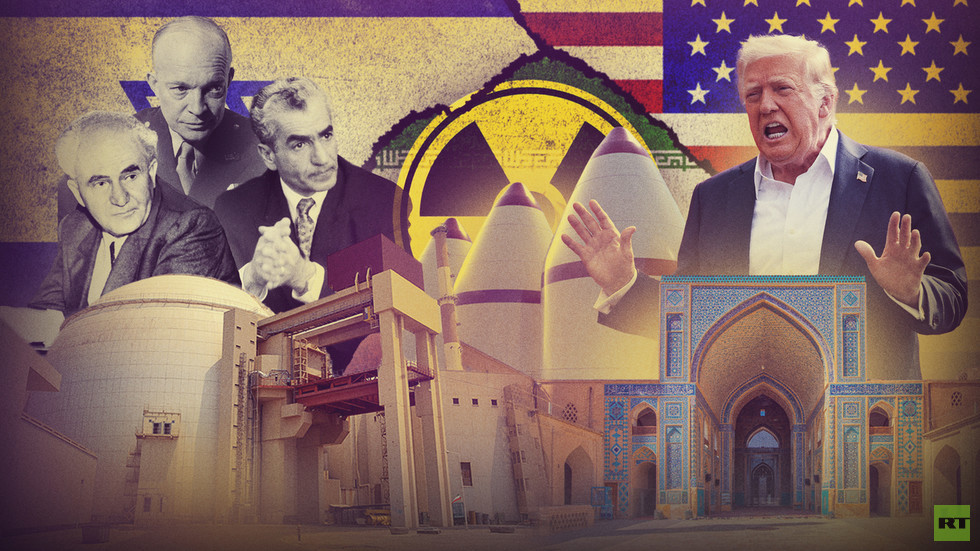
Did you know the US and Israel helped create Iran’s nuclear project? Here’s the story
From research reactors and Western contracts to blockades and threats of war, Iran’s nuclear history is also a history of Western reversal
“…Iran’s nuclear program did not begin with the Islamic Revolutionary Guard Corps. It did not begin with the Islamic Republic. It did not begin as an anti-American project. It began under the Shah, when Iran was a close US ally. And it began with direct American assistance.
When Iran’s nuclear dream was a Western project
The origins of Iran’s nuclear program were actually a pro-Western modernization project of the Shah’s era, and it was the Western countries that acted as the architects in the early stages, Nikolay Sukhov, a leading researcher at the Primakov Institute of World Economy and International Relations and professor at the HSE University in Moscow, told RT.
The Atoms for Peace program, launched by the Eisenhower administration, was designed to export nuclear technology to US allies for peaceful purposes: Research, energy, and medicine, Sukhov said.
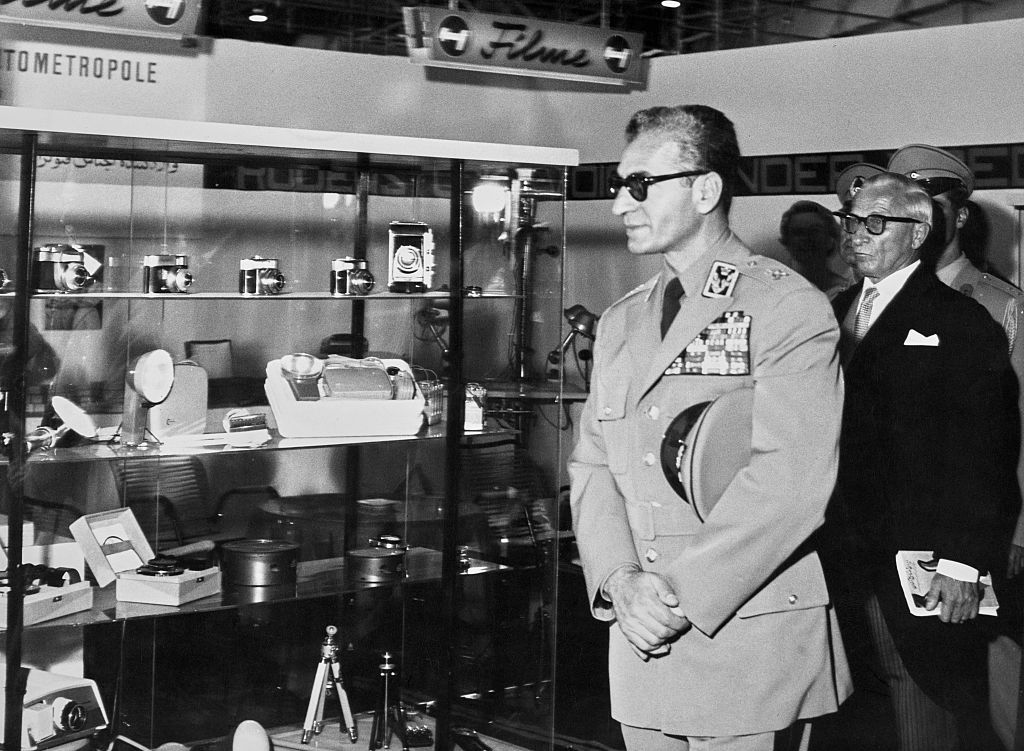
Practical implementation began in the late 1950s, when Iran and the US signed an agreement on the peaceful use of nuclear energy. Under the agreement, Washington committed to supplying Tehran with nuclear installations and equipment, and to helping train Iranian specialists.
Later, in 1967, the US delivered Iran’s first research reactor. Iranian nuclear experts were trained not only in the US, but also in Britain, Belgium, West Germany, Italy, Switzerland, and France. Specialists from Israel, West Germany, France, and the US agreed to work on the project and started laying the foundation for a reactor at Bushehr in southern Iran and a research reactor in Isfahan. Iran signed the Treaty on the Non-Proliferation of Nuclear Weapons (NPT) and ratified it in 1970, formally confirming the peaceful status of its nuclear program…..
The shah placed his bet on large-scale nuclear energy as a pillar of industrialization and as a way to reduce dependence on oil. Paradoxically, that was precisely the logic: Nuclear power would free up more oil for export,” Sukhov said.
Israeli advisers, who Mohammad Reza Pahlavi reportedly listened to carefully, were among those who convinced him that a country with such vast oil wealth deserved its own nuclear power plants. This is an important detail, because today Israel presents Iran’s nuclear infrastructure as an intolerable threat by definition. But in the Shah’s Iran, Israeli involvement in strategic and technological modernization was not unusual. Iran and Israel maintained close security, intelligence, and technical ties. The same Iran that is now described as a permanent danger was then part of a regional order that Washington and its allies wanted to strengthen.
Israel’s role went back even earlier, to May 1958, when David Ben-Gurion received two Iranian nuclear scientists in his office. According to his notebooks, the visitors said they had come to establish ties with the Israeli scientific world and told him respectfully: “We have heard that in everything concerning science, you are at the level of the Americans.”
The Shah’s vision was simple and grandiose: To move Iran “from the Middle Ages into the nuclear age.” The nuclear project, in his mind, would place Iran in the top ranks of Middle Eastern countries. He said Iran would have nuclear weapons “without a doubt and sooner than one would think,” a statement he later disavowed.
Though the Western countries didn’t see Iran as anything but a partner, Washington did have concerns. Declassified documents from the Ford and Carter years show that US officials worried about the Shah’s interest in plutonium reprocessing, a technology that could provide a faster route to a bomb than enriched uranium. And yet no one seemed concerned enough to stop the process – or perceptive enough to notice another one unfolding in parallel: The slow build-up of a revolution that, within just a few years, would erupt.
The Revolution that inherited the atom
By the time the Shah fell in 1979, the construction of Iran’s first two nuclear reactors, with German participation, had already entered the final stage. The monarchy was gone but the infrastructure remained. So did the idea that nuclear technology was not simply about electricity, but also about development, prestige, and national independence.
“The turning point came after the Islamic Revolution. Most Western specialists left the country, projects were frozen, and cooperation with the United States and Europe came to an end. But the infrastructure already built – along with the experts Iran had trained – became the foundation for a later program that was more autonomous, more closed, and much harder for the West to control,” Sukhov said.
Then came the Iran-Iraq War.
From 1980 to 1988, the Bushehr area was a repeated target of Iraqi air attacks. The unfinished nuclear plant, visible from a distance, was an obvious and symbolic target. According to Iranian media cited in the source material, American assistance allegedly helped guide Saddam Hussein’s pilots toward the facility several times. The attacks killed workers, damaged parts of the plant, and turned what had once been a prestige project of the Shah into a battlefield ruin…..”
“…What had begun under the Shah as a Western-supported modernization project had become, under the Islamic Republic, a permanent international crisis.
The larger irony remained intact. Iran’s nuclear program began with American approval, European contracts, Israeli contacts, and international legitimacy. After 1979, the same infrastructure became radioactive in the political sense. It was no longer the nuclear dream of a friendly monarch. It was the nuclear ambition of a state that had broken with Washington.
Today’s American outrage has a strange historical aftertaste. Trump wants to erase what earlier American policy helped create, and Israel wants to destroy a nuclear capacity that Israeli experts once helped nurture. The point is not that Iran’s nuclear program was ‘good’ when the West helped build it and ‘bad’ once the Islamic Republic inherited it. The point is that it became unacceptable when it was no longer in the hands of a US-aligned client state.
After 1979, the same infrastructure, institutions, and expertise ended up under a government Washington could not control. And despite losing Western support, Iran managed to keep the program alive through procurement, covert development, and partial localization. Over time, this produced a more autonomous nuclear cycle. It also gave Iran the ability to move close to weapons-grade capability without formally leaving the NPT. This is what made the program so difficult for Washington to contain – not simply that Iran had nuclear technology, but that it had learned how to sustain and advance it without being a client of the West.”
*******
Greencrow continues: Folks when I read the entire article in RT yesterday I was reminded of other projects that ended up being “set-ups” for future USrael attacks on indigenous countries. After all Israel and Netanyahu funded Hamas being set up in Palestine and then used this group as the “Bête noire” for future attacks and destruction of the Palestinian indigenous real Semites and theft of their land.
It seems like a stock Israeli strategy. Set up a future casus belli in a country. Fund and let it grow and then use it to justify an attack or cause a “False Flag” attack on another country. Whatever the variation it seems to be a part of their evil mindset and tactics.
Iran has every right and even a sovereign duty to defend itself from any foreign threat. If having nuclear capability is the only way to prevent violent foreign takeover that is their inalienable right. As we all know Israel has nuclear bombs and Trump recently threatened to turn Iran into an “orange glow”.
The United States is the only country to ever bomb civilians with nuclear bombs–twice after World War II was virtually over did the US bomb Japanese cities Hiroshima and Nagasaki. I just found out over the past few months that Nagasaki was targeted because it had a few years earlier expelled a colony of European Jews.
OTOH, Iran has always played by the rules…it is only the USraeli West that uses subterfuge, False Flags and “set ups” to destroy and grab. Iran waited until it was attacked to defend itself. It calls its military defense a “Sacred Defense”.
Stay tuned.
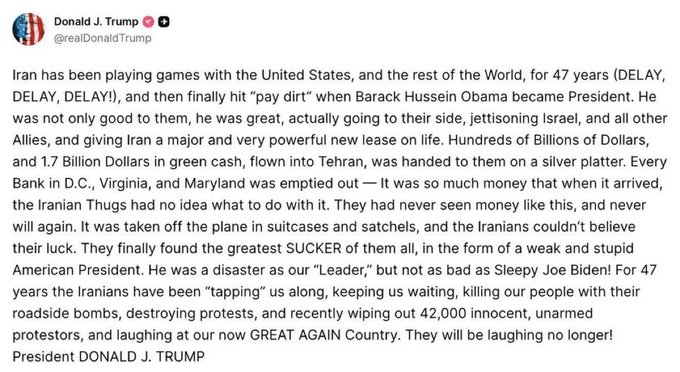
UPDATE: With Iran up against an enemy state led by a madman like this who wouldn’t consider nukes?


I also read some yrs. ago, when the beasts planted the first bomb, it was on the
only Christian church in Japan. Right smack on top of it. The Japanese people
built the church. Nothing’s by mistake.
LikeLiked by 1 person
Hi The Willpower:
Thanks for your support over the years. Your courage in putting a “like” after reading my work means a lot to me. I did not know that the bomb on Hiroshima targeted a Christian church. I do suspect and fear that this War on Iran will end with a nuke dropped by USrael. Why not? After all, they used suitcase nukes to drop the Twin Towers…killing over 3000 of their own people.
LikeLiked by 1 person
Thank you so much, Greencrow. Have always enjoyed your site. You have the
gift of reporting the unsaid which is what one wants to hear and read.
LikeLiked by 1 person